
You Answer For It. You Can't Decide It. Nobody's paying for the gap.
The work arrives before the role does. Escalations route to one person, the number lands on their name, and the decisions stay elsewhere. No title was created, no charter written, no comp band set. This is the difference between doing an executive job and being formally authorised to hold one.

Fig. 01 — The block holds. The missing cube was never assigned to anyone.
Every escalation routes to you.
The cross-functional messes. The decisions nobody else can make. The question that gets asked when the meeting goes quiet — that gets asked to you.
Then you try to change one of those things, and you need three people to sign off.
That's the gap. You answer for it. You can't decide it. And nobody's paying you for the difference.
One missing box
The work exists. The role doesn't.
Nobody approved the headcount.
Nobody wrote a charter.
Nobody set a band. You've been doing the job anyway — for about two years now, if you're like most people who end up reading something like this.
They never opened the role. So they never paid for it.
You did.
Three things that felt like separate failures collapse into one cause.
No title, so there's nothing to recognise you with. No charter, so there are no decision rights behind you. No band, so there's nothing to pay you from.
Which explains the part that has probably been confusing you most:
why performing better hasn't worked.
You cannot earn your way into a role that does not exist. No review cycle draws a box on an org chart.
Someone has to open it, deliberately, on paper.
Two economists took this apart in 1997
In the Journal of Political Economy, Philippe Aghion and Jean Tirole — Tirole won the Nobel Prize in Economics in 2014 — separated two things every company treats as one.
Formal authority is "the right to decide." It comes with the role.
Real authority is "effective control over decisions." It's what actually determines what happens.
Their finding is simple: Authority Follows Information, not Rank.
Picture the sign-off. Someone two levels up approves something they haven't touched in months. They can't tell which risks are real.
So they approve it. Saying no to something you don't understand is the riskier move.
That's a rubber stamp. The person who wrote the proposal made the call — with nothing on paper saying so.
In the authors' words: the subordinate "has real, although no formal, authority."
You probably know exactly who runs that dynamic at your company.
The map and the keys
One person has the map — the route, where it's washed out, which turn looks right and isn't. The other has the keys. They decide when the car leaves, and whether it leaves at all.
Neither gets anywhere alone. Both think they're driving.
If you hold the map, decisions route to you because you see the whole system.
None of it is formalized down, so it holds until someone senior uses the authority they formally have.
Then you find out what you had was never a position. It was a habit the organisation had gotten into.
If you hold the keys, you have the title and the number, but the information and the levers live in three other functions.
You decide what doesn't move the outcome and can't decide what does.
Both are exposed. They are not fixed the same way.
Name it accurately
Responsibility without authority is the structural condition where what you're answerable for exceeds your formal mandate, decision rights and recognition.
The distance between the two is the Executive Authority Gap™. When it forms around AI systems — you own the outcome, you can't stop the model — it takes its sharpest form: the AI Authority Gap™.
If the problem is you, the fix is more effort, and you've already run that experiment.
If it's structural, the fix is a redesign.
The part that stings
There's a result in that 1997 paper most people who cite it skip.
The model finds conditions under which a firm is better off keeping the person at the top overloaded and under-informed. Not by accident — by design. An overloaded principal can't micromanage, and one who can't micromanage credibly defers.
The paper's language: "it is always optimal for the firm to be in a situation of overload so as to credibly commit to rewarding initiative."
So the condition you've been treating as a personal capacity problem may not be a failure of your organisation at all. It may be how it's designed to run.
That's better news than it sounds. A capacity problem gets solved by working harder, which you've tried. A design problem gets solved by changing the design, which you haven't.
It has been measured for forty-five years
Researchers followed 10,308 British civil servants across 20 government departments, measuring how much control people had over their own work.
Those with persistently low control had an odds ratio of 1.93 for a subsequent coronary event, against those who consistently had high control.
That's not the surprising part. The same study measured how demanding the jobs were.
The authors wrote: "Job demands and social support at work were not related to the risk of coronary heart disease."
Not weakly. Not related.
A companion paper in The Lancet went further. The heart-disease gap between the lowest and highest civil-service grades essentially vanished once researchers adjusted for job control — the odds ratio fell from 1.50 to 0.95.
The people at the top, carrying the heaviest demands, weren't the ones the structure was grinding down. The people below them, with less demand and far less control, were.
It was never the volume of the work.
One honest caveat: a larger 2012 analysis pooling 197,473 participants put the effect lower — a hazard ratio of 1.23, about 3.4% of population risk against 36% for smoking.
Real, replicated, modest. This is not a claim about your health.
It is a claim about your structure — one researchers have tracked since Karasek named the demand-control model in 1979, and that business spent those same decades filing the authority gap under their personality.
Why the usual moves don't close it
A bigger title transfers formal authority. If the role was never opened with a charter, a bigger version is a bigger box with nothing in it. That is what corporate title inflation is, and marketing is its epicentre — Forrester's 2026 analysis found only 36% of Fortune 500 companies still use the literal "Chief Marketing Officer" title, down from 55% in 2024, while the remit swallows revenue, AI and data.
Leaving is sometimes correct. But as of January 2026, ADP put median pay growth for job changers at 6.4% against 4.5% for stayers — a 1.9-point premium, the narrowest since tracking began in 2020. And if the same arrangement waits at the next company, you've changed the letterhead on the same unopened role.
What closes it
None of that is a verdict. It's a design. Designs get redrawn.
The org chart box has to be opened, formalized for a specific set of outcomes.
Four things move from implicit to explicit:
the mandate — what you're answerable for; the decision rights — what you can change without convening anyone; the override rights — what you can stop, and when; and the compensation — what the organisation pays for the risk on your name.
Formalized authority survives a reorg. Assumed authority doesn't survive one determined executive.
The shape isn't the hard part. The sequencing is — which to open first, who has to agree, what language survives legal and comp review, and how it holds through the next reorganisation instead of resetting with the new chart.
That is the Executive Authority Method™, and it's advisory work done against one person's actual situation. Not a public playbook.
A 60-second self-check
Take one outcome you're answerable for:
1. When the room has a hard question about it, do they turn to you?
2. Can you change it on your own signature — no meeting?
3. Is any of it formalized or documented anywhere?
Yes on 1, no on 2 and 3: you hold the map and no keys.
What I'd tell you as a peer
In 25+ years as a marketing and product management executive — including as a tech CMO — I did the job before I had the role more than once. Everyone does. That part is normal.
What changed my trajectory was refusing to keep doing it on a handshake.
What I owned, I owned in writing: what I decided, what I could stop, what I was paid for.
Owners negotiate terms. Employees negotiate recognition.
That's not a personality trait. It's a position, and positions get re-constructed.
---
THE DIAGNOSIS
You are not underperforming. You are doing a job that was never created.
You're likely in the authority gap when:
• You're accountable for outcomes, but not part of the decisions shaping them
• Your scope has expanded — your authority hasn't
• You're operating across functions without clear ownership
• You spend more time aligning stakeholders than making decisions
• Your title and compensation don't reflect the responsibility you're carrying
• You're consistently “almost ready” — but not advancing
If this is your situation, the first step is knowing where the gap actually sits.
Take the 30-second Authority Gap Check → Here
It shows you where your accountability and authority have come apart — and how to close it.
No Sign-Up. No Obligation.
READ NEXT
01 The Executive Authority Gap ·
02 Structural Authority: What Actually Gives an Executive Power ·
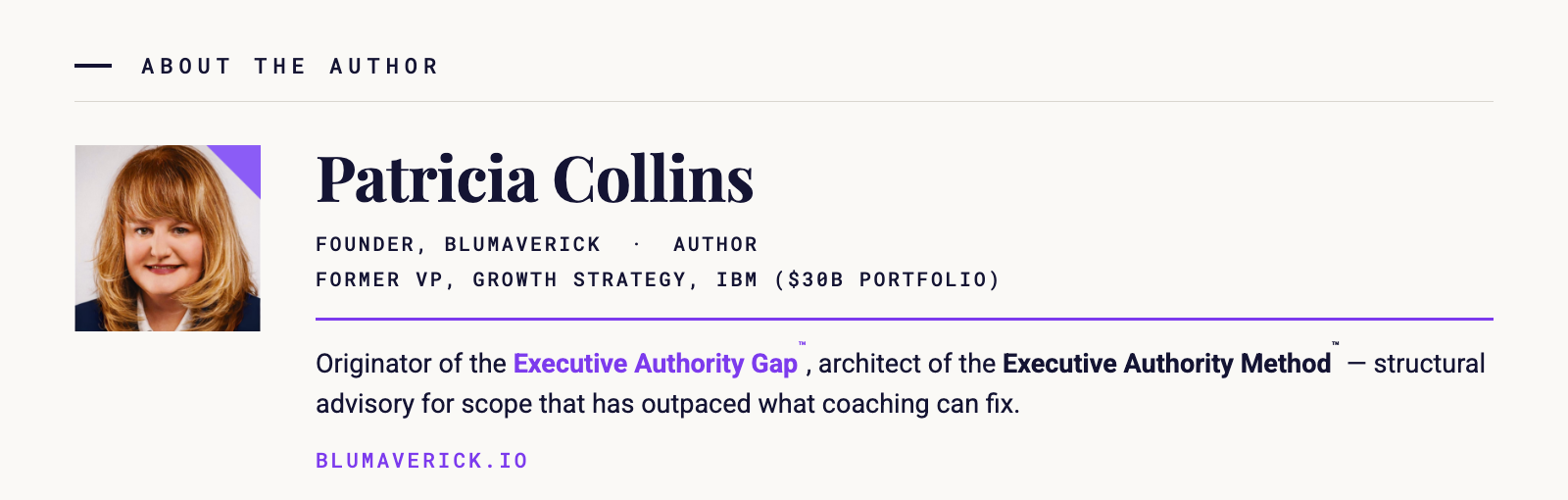
Fig. 2- About the Author: Patricia Collins
Power moves that skip the org chart.
Continue exploring executive authority, structural diagnosis, and the moves that create momentum beyond formal title.
View more Sideways articles →