
Responsibility Without Authority™ What Every Yes Costs You. They Just Say Thanks.
You said yes to the extra project. You were told to help meet a transition deadline. Your manager doesn’t realize you think it’s a test for the next promotion cycle. Here’s what it costs you.

Fig. 01 — Each yes adds a level of work. The promotion that should have followed never does.
Our research shows 31% of senior executives and 24% of managers find it difficult to manage change. (PwC, Global Workforce Hopes and Fears Survey 2026.)
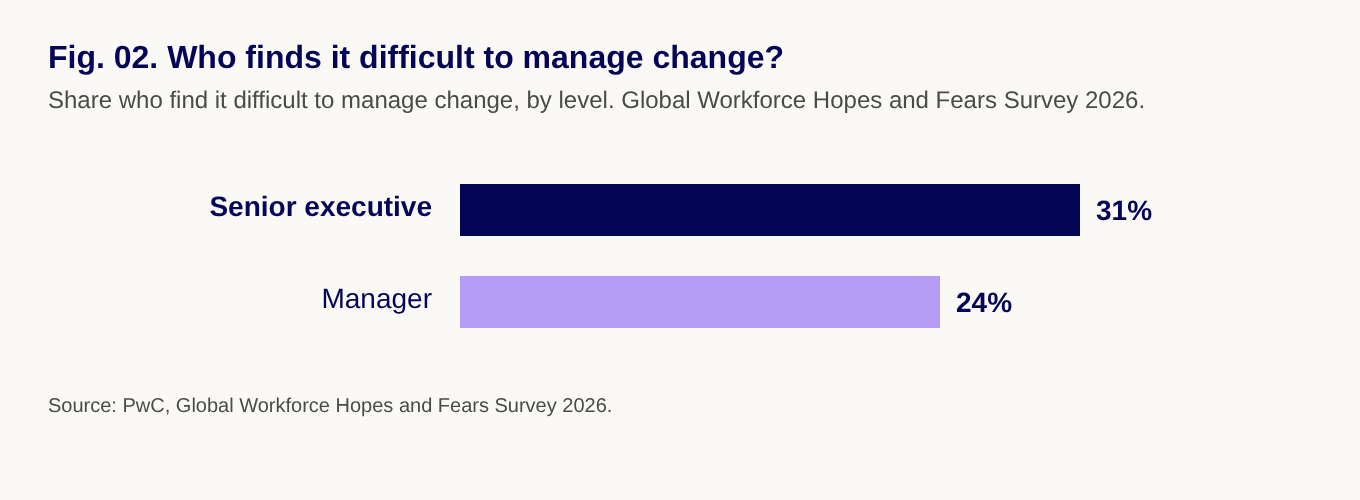
Fig. 03. Senior executives find managing change hardest.
Nobody built you for the next level
The job asks for more. The additional mandate it gives you to grow into it is the other half of the problem.
If the role came first and the executive development never followed, the yes you give is often the only proof you have that you can handle more. PwC's Global Workforce Hopes and Fears Survey 2026 found that only 51% of workers say they have access to the learning and development resources they need, down from 59% last year. It's a global survey of all workers, not executives, so treat it as the backdrop, not a measure of your level.
Even among senior executives, just over half (51%) say they have applied new skills in their roles. (PwC, press release, 29 Sep 2026.)
Access is uneven, too. PwC's "front-runners," the workers it describes as moving fastest, are at 79% access to learning and development resources. PwC's "engine room" workers are at 39%. (PwC, Global Workforce Hopes and Fears Survey 2026.)
Executive development is what turns your next level from a hope into a plan. Less of it is being offered this year. PwC's own recommendation is to make learning and reskilling available without increasing workloads, including training and tools to help people reduce financial stress. The pressure behind that is visible in the same survey: almost two-thirds (62%) say the cost of living has had a moderate or major impact on them at work. (PwC, Global Workforce Hopes and Fears Survey 2026.)
The trap goes one step further. When the promotion comes up, the yes you gave to more responsibility is measured against a skill nobody trained you for. You're told you aren't ready for the role, and the reason is the experience the role was supposed to give you. That's our read of how these reviews tend to run, not a measured finding.
Managing change is exactly when executive development matters most, and it's the thing the survey says is shrinking. Our read of that trend, not a finding about any one company: the people asked to lead through change are getting less help doing it. Learning that works has to fit inside the workload, not sit on top of it, and it has to reach the people carrying the most.
Maybe that's you. You took the extra project. You picked up the transition project escalation nobody else wanted. You told yourself it was an audition: prove you can do the bigger job, and the bigger job arrives.
Your manager may have heard something else entirely: a gap that needed filling, and you were the one who said yes.
Neither of you is lying. You're working from two different contracts, and only one of them was ever said out loud.
How common is this?
Very. The Talker Research survey on extra work found that 78% of workers were voluntold to do something in the last year, meaning assigned new work they didn't apply for or agree to. Of those who received new work involuntarily, more than half had never received a raise or a promotion for it. The sample is general workers, not executives. Treat it as a pattern, not a measurement of your level.
The employer's side of the same deal is just as telling. In a 2023 Robert Half Australia survey of 300 hiring managers, 45% of employers who gave existing staff extra duties paid no financial incentive for them.
(Robert Half Australia, 2023. Australian employers, mostly CFO and CIO respondents)
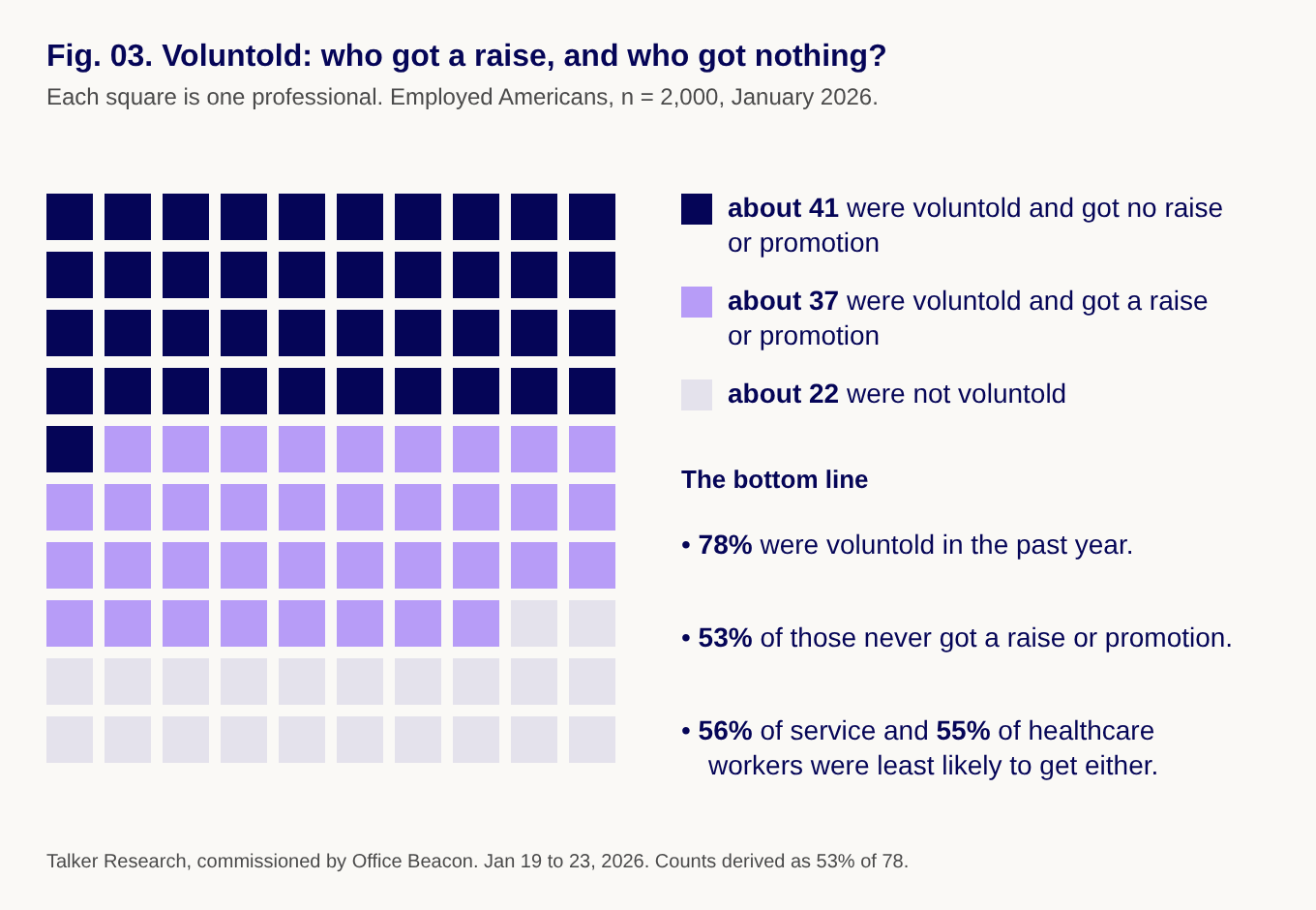
Fig. 03. Voluntold: who got a raise, and who got nothing?
A separate 2025 survey of 1,000 US employed adults, published by a resume site, found that 53% said they had been promised promotions or opportunities that never materialized. Again, a commissioned survey of general workers, not a peer-reviewed study.
The audition only counts if someone decides it did
Here's the mechanism. An audition needs a judge, a score and a result. The extra work you take on doesn't come with any of those. Nobody has been told the audition is running. Nobody has been asked to score it. So the work gets logged as coverage, and the promotion conversation never mentions it.
That's why the mismatch lasts. You keep auditioning, the organization keeps asking you to cover a gap, and each side assumes the other knows the terms.
What it's costing you
Every yes has a price. It doesn't appear as a line item. It shows up later, in ways that are hard to trace back to the request:
The work you're actually measured on gets done in the margins, because the extra project took the good hours.
The extra work rarely becomes a result in your review, because nobody agreed what it was meant to prove.
Over half of the people in the Talker data who took on extra work got no raise or promotion for it.
When the promotion conversation comes, the year of yeses has no line item. You're left trying to explain it in a sentence.
Here's the uncomfortable part. Saying yes feels like progress. Without an agreed outcome, it's the same work with a more impressive name on the request.
The money side
The cost isn't only to your career progrssion. It shows up in your paycheck. Only 34% say they pay their bills and have money left over, down from 45% in 2024. (PwC, Global Workforce Hopes and Fears Survey 2026.)
The extra work lands on the same people. PwC's survey finds that 63% of workers say their workload has increased to at least a moderate extent, and 57% say their responsibilities have changed to that extent. PwC measures the workload and the change. It doesn't measure whether authority or pay moved with them. That gap is the one we see in our work, and it's the reason extra responsibility so often arrives without the comp or title that should come with it. This is our read, not a PwC finding.
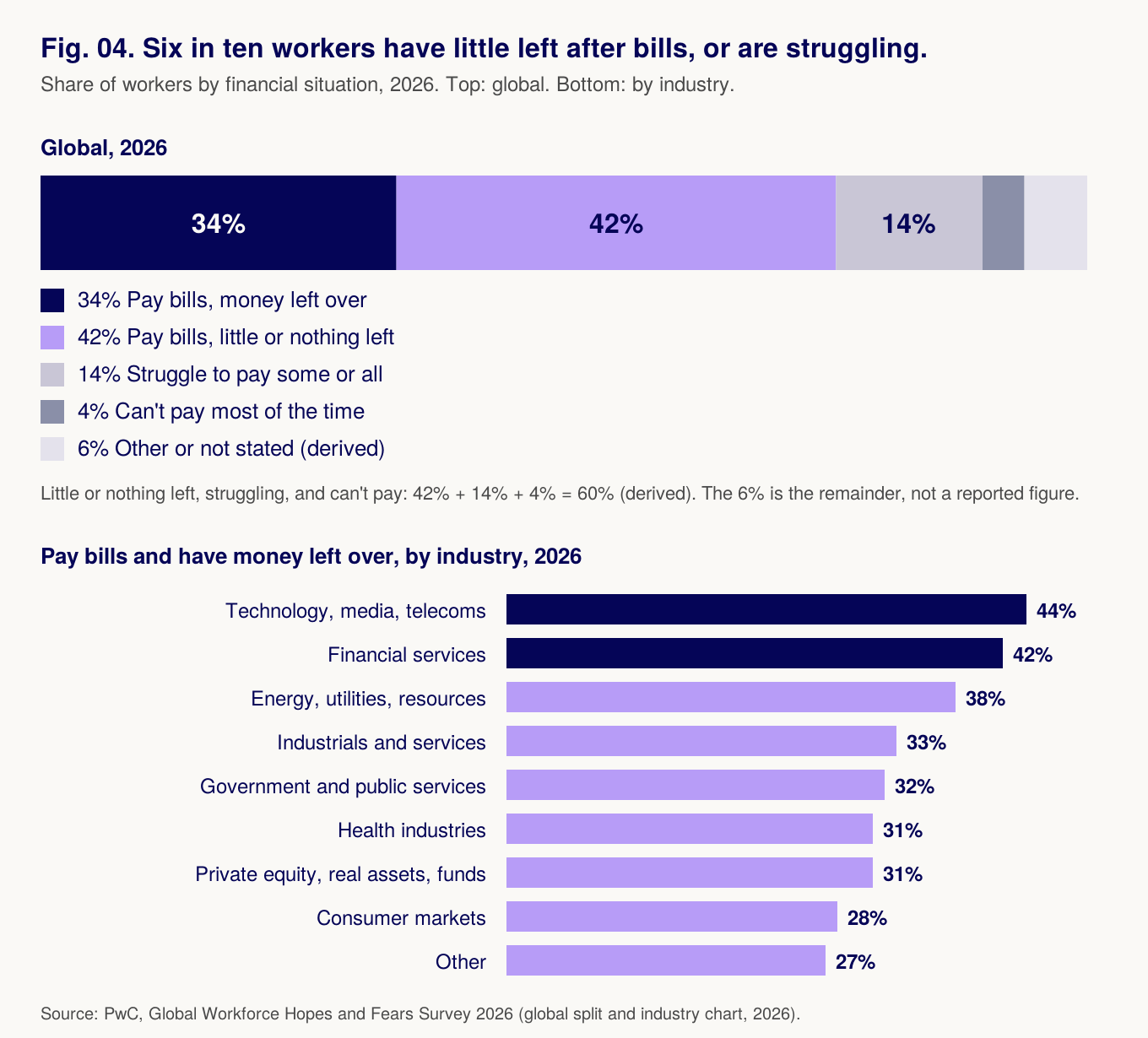
Fig. 04. Six in ten workers have little left after bills
Why now
The timing matters, too. Next year's planning is being set now. Budgets, targets and owners for 2027 are being agreed this quarter, and whatever you're carrying informally gets written into them as if it were already a part of your job. The yes you give this autumn can become the baseline you're measured against in January. This is our read of how planning cycles work, not a measured finding.
AI makes the handover easier. More tasks can be pushed to the person who already says yes, and the pile grows faster than the authority that would let you shrink it.
Why this lands on you
If you lead marketing or RevOps, the cost is personal: your next seat, your comp and whether the people above you can see the work you're doing. The extra project feels like a step toward the next role. Without a formalized and agreed outcome, it's more load carried by one person, with no record that it was ever a step at all.
We've covered the other side of this twice in August. "Three Layers of Accountability. One Layer of Authority" argued that a CMO ends up doing three jobs for free, none of them carrying authority, comp, or a title. "The Org Chart Lost a Layer. Your Name Stayed on the Number" looked at what happens when the number lands on your name and the decision never did. This piece is about the yes that comes before either of those: the first time the extra work is asked for, before anyone is counting the layers or scoring the result. Read those for the structure. This one is about the yes.
Your next move
You can keep taking on the next problem and hope the additional responsibility is formalized in the next performance review.
Or you can find out what your yeses are worth, and what would have to change for you to be compensated for them.
You’ve said yes to more responsibility than your authority covers. The Executive Authority Gap Checklist shows where that gap is. Take the Executive Authority Gap Checklist →
If your year reads like this, stop doing it alone. Begin a private conversation with Patricia:
Bring your list of yeses and leave with a clear next step toward winning back your authority and your comp.
Blumaverick calls the distance between the work you carry and the authority you're formally given the Executive Authority Gap™. The full method is delivered in Blumaverick’s executive advisory work.

Patricia Collins, Founder of Blumaverick
Power moves that skip the org chart.
Continue exploring executive authority, structural diagnosis, and the moves that create momentum beyond formal title.
View more Sideways articles →